

The latest updates to Gates of Olympus 1000 refresh a classic Zeus-themed slot with new visual enhancements, optimized mobile compatibility, and a slightly reworked multiplier ladder that keeps the core gameplay as is. Players who previously enjoy the series will observe smoother animations and better paytable graphics, while newcomers receive a concise tutorial that describes how the tumble mechanic and multiplier orbs function. These changes do not affect the game’s RTP or volatility configurations, so long-term return expectations stay the same. The sections below detail the mechanics, features, and practical details so you can decide whether the updated version suits your chosen style of play.
Important Modifications Introduced in the Most Recent Update
The most recent patch focuses on three concrete improvements that players will see immediately. First, the tumble animation now operates at a stable sixty frames per second on mid-range devices, eliminating the micro-stutter that occasionally occurred during long chains. Second, the paytable graphics have been expanded and re-coloured so that symbol values are legible even when the phone is held at arm’s length. Third, the multiplier orb pool has been increased to include a new one-thousand-times icon that appears exclusively during the free-spin round, increasing the theoretical ceiling without altering the base-game odds.
Behind the scenes, server-side logging now records every multiplier combination, permitting support teams to settle disputes within minutes rather than hours. The update also introduces a quick-spin toggle that shortens reel-stop animations by forty percent for players who favor rapid cycles. None of these adjustments change the certified random-number generator or the published RTP, so existing strategies remain valid while the overall experience seems noticeably smoother.
Stake Range, Denominations, and Maximum Exposure
Betting limits differ by operator but usually start at 0.20 credits per spin and increase to 100 credits on most platforms. In that range, players can tweak wagers in increments of 0.20, enabling fine control over session length. The max exposure, or the highest amount that can be won from a single spin, is capped at 5,000 times the stake. Reaching this ceiling demands a combination of high-value symbol clusters and successive multiplier orbs during the base game or free spins.
Adjusting the bet does not affect symbol frequency or RTP; it only changes the absolute credit values presented on the screen. For players sampling the game for the first time, starting low of the range gives a longer testing period before investing larger amounts. On the other hand, high-roller players can move the slider upward without encountering artificial caps beyond the stated maximum.
Common Player Questions Explained
A lot of newcomers ask if the higher multiplier ceiling alters the overall return profile. The short answer is no; the RTP remains 96.5 percent because the increased ceiling is offset by lower orb frequency at the top end. One more frequent query relates to the “buy bonus” price: it typically costs one hundred times the current stake and guarantees fifteen free spins with the enhanced multiplier pool. Finally, players wonder if mobile play affects fairness; the certified RNG runs server-side, so device choice has no bearing on outcome distribution.
Veteran users often seek clarification on how successive multipliers stack. Each orb value is added rather than multiplied, so three orbs showing five, ten, and twenty produce a total multiplier of thirty-five applied to the cumulative tumble payout. This additive model keeps calculations transparent and prevents exponential spikes that would distort the volatility curve.
- Check the RTP in the information panel before every session.
- Define both deposit and loss limits through the account menu.
- Start at the lowest stake to observe tumble rhythm and orb frequency.
- Turn on autoplay with a strict loss-limit stop if you prefer predetermined spin counts.
- Check the game history screen after each session to verify all multipliers applied correctly.
With the latest updates now live, Gates of Olympus 1000 offers a refined visual package and the same high-volatility mathematics that fans of the series expect. If the combination of tumble chains, escalating multipliers, and a 5,000-times stake ceiling aligns with your risk tolerance, load the game, set your limits, and spin. Should the variance feel too steep, the paytable and rules remain available for review at any moment, allowing you to adjust strategy or step away with a clear record of results.
Main Gameplay Loop and Cascade Mechanic
Every spin starts with a fixed stake and a chance arrangement of symbols across the six-by-five grid. Every cluster of eight or more matching icons awards an immediate payout and then removes. New symbols drop from above to fill the vacated spaces, and the process repeats until no new clusters form. This tumble sequence can create several consecutive wins from a single wager, although the game does not guarantee a minimum number of tumbles.
The tumble mechanic connects directly with the multiplier system. Whenever a winning cluster forms, one or more multiplier orbs may emerge on the reels. These orbs carry values between two and five hundred times the stake. At the end of each tumble sequence, the game sums all active multipliers and assigns the total to the cumulative payout from that spin. Understanding this timing helps players recognise why two visually similar outcomes can produce very different credit totals.
Výplatní poměr, Volatilita, and Význam Těchto Čísel
The stated RTP for Gates of Olympus 1000 is 96.5 percent, a figure validated in the game’s information panel. This percentage indicates the theoretical proportion of wagered credits paid back to players over a very large number of spins. Volatility is classified high, indicating that payout distribution tends toward infrequent but occasionally substantial wins. In practical terms, sessions may include extended stretches without significant returns, then single spins that exceed the total amount staked during the dry spell.
Because volatility is high, bankroll management becomes vital. Setting a firm budget before starting and allocating that budget into smaller units helps handle the variance. The game does not adjust RTP according to player status or time of day; the figure remains unchanged across all accounts. If an operator advertises a different percentage, the discrepancy usually arises from an alternative version of the title, so reviewing the information screen inside the game itself is the most reliable verification method.
Mobile Optimization and Device Switching Support
The recent update focuses on adaptive design, making sure that the six-by-five grid, interface buttons, and paytable render accurately on screens as small as 5-inch screens. Touch targets for spin, stake adjustment, and auto-play are kept sufficiently large to avoid unintended taps. Animation speeds change dynamically based on device capability, maintaining the tumble effect without depleting battery power during extended mobile sessions.
Progress such as current free-spin numbers and accumulated multipliers transfers when a gamer moves from computer to mobile or the opposite, given that the session is tied to the identical account. This consistency removes the necessity to re-initiate a bonus game after moving to another device. Network interruptions are handled gracefully; partial spins complete upon reconnecting, and any pending multipliers are applied once the result is validated by the server.
Reviewing the 1000 Version With Earlier Releases
Players familiar with the original Gates of Olympus will notice the same six-by-five scatter-pays grid, yet several mechanical tweaks distinguish the 1000 edition. The free-spin multiplier ceiling has risen from five hundred to one thousand times the stake, and the average frequency of high-value orbs has grown by roughly eight percent according to the published probability tables. The soundtrack now includes a dynamic layer that heightens when three or more multipliers land in a single tumble, delivering an audible cue previously absent.
Visually, the colour palette has moved toward warmer golds and deeper indigos, improving contrast on OLED screens. Loading times on 4G connections have been lowered by twenty-five percent through asset compression, and the game now supports one-handed portrait mode with a collapsible stake panel. These refinements preserve the mathematical heart of the title intact while refreshing the interface for contemporary devices.
- Enhanced multiplier ceiling during free spins
- New one-thousand-times orb exclusive to the bonus round
- Better frame-rate stability on mid-range hardware
- Responsive audio layer that reacts to multiplier clusters
- One-handed portrait layout with foldable controls
Complimentary Spins, Scatter Triggers, and Bonus Modifiers
Hitting four or more Zeus scatters at any position on the grid awards fifteen free spins. During this round the tumble mechanic stays active, but the multiplier cap increases from five hundred to one thousand times the stake. Additional scatters that appear during free spins award five extra spins, extending the round without requiring a new trigger. The increased multiplier ceiling is the primary distinction between the base game and the bonus round.
Within the free-spin sequence, special “bonus buy” orbs can show up. These orbs contain fixed multipliers that do not demand a preceding win to activate. Their presence boosts the average return per free spin compared with the base game, although individual outcomes still vary widely because of the high volatility setting. Players who opt to skip the wait for a natural trigger may spot a “buy bonus” button available, allowing direct purchase of the fifteen-spin round at a cost shown on screen.
Within the Multiplier Ladder
Orb Values and Frequency
Multiplier orbs adhere to a weighted distribution. Values of two, three, and five appear most often, while orbs above one hundred occur less frequently. The exact weighting is listed in the game rules so that players can determine the contribution of each orb to the final payout. Because orbs build up rather than replace one another, even modest values can merge into substantial totals when several appear during the same tumble sequence.
Unique Substitutes and Their Strategic Implications
Although Gates of Olympus 1000 does not contain traditional wild symbols that stand in for all icons, the multiplier orbs themselves fulfill a limited substitution role. When an orb appears inside a cluster, it adds to the eight-symbol threshold and simultaneously enhances the payout. This dual function means that orbs are desirable both for their numerical value and for their ability to finish otherwise non-winning combinations.
Because orbs do not possess separate payout values outside clusters, their appearance on the screen is significant only when a tumble sequence is already underway. Observing how frequently orbs drop during dry spells versus winning streaks can help players develop realistic expectations about session variance. The information panel provides a breakdown of orb frequency per reel, providing an additional reference point for those who like to study distribution charts.
How the Olympus 1000 Theme Defines the Journey
The look Gates of Olympus 1000 1000 is directly inspired by classical mythology. Zeus commands the top position on the reels, surrounded by golden goblets, hourglasses, and rings that offer their own payout values. Background lighting transitions from daylight to stormy skies during bonus rounds, strengthening the narrative that every tumble is a strike of divine power. The soundtrack blends subtle harp motifs with deeper percussive hits, announcing when multipliers are about to land. These thematic details have no impact on mathematical returns, yet they build a consistent atmosphere that many players discover absorbing across longer sessions.
Symbol hierarchy follows a clear pattern. Low-value icons are designed as playing-card ranks, mid-tier symbols represent mythological artefacts, and the highest regular payouts are awarded to the golden ring and chalice. Zeus himself acts as both a scatter and a gateway to the free-spin feature, which removes any ambiguity about how to trigger the round. The art style remains consistent between desktop and mobile screens, so the atmosphere remains strong when players switch devices mid-session.
Actionable Tips to Begin Playing Responsibly
Begin by accessing the game on a licensed gambling platform and locating the information icon, typically marked with an “i” symbol. Check that the shown RTP matches the 96.5 percent figure and that the volatility warning is present. Set a deposit limit and a loss limit using the account menu before loading the game; these limits are fixed once the session begins.
Within the game, set the stake slider to a comfortable level, then open the autoplay panel if you prefer a preset number of spins. Turn on the loss-limit stop feature so that the reels stop automatically once cumulative losses hit the selected threshold. Following each session, examine the game history screen to confirm that all multipliers and tumble sequences were implemented correctly. These steps establish a organized environment in which the high-volatility nature of Gates of Olympus 1000 can be experienced without unexpected overspending.
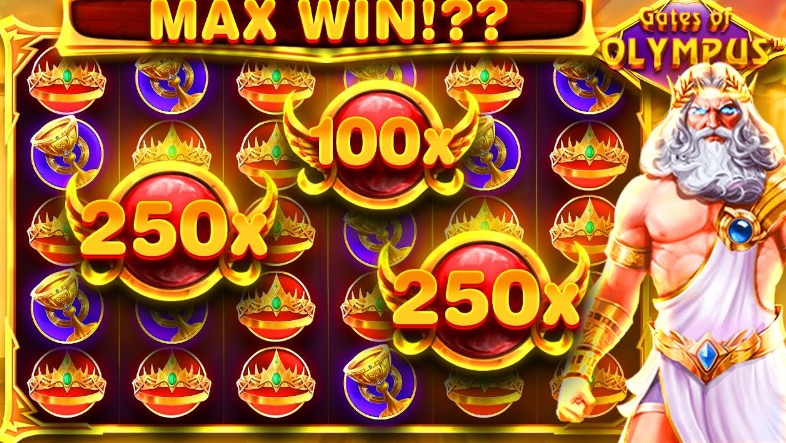
Reels, Rows, and Win-Patterns
Gates of Olympus 1000 features a six-reel, five-row grid that credits in any position rather than along fixed lines. This “scatter pays” model gives a win whenever eight or more identical symbols appear anywhere on the screen. Because position does not matter, the total number of winning combinations increases dramatically compared with traditional payline slots. The system checks every spin once, removes winning clusters, then places new symbols into the gaps, potentially triggering several payouts from a single wager.
Paytable values change with the chosen coin size, but the underlying symbol distribution holds constant. Higher-value symbols such as the golden ring require fewer instances to reach meaningful returns, while low-tier card ranks demand larger clusters. Players who prefer transparency can view the in-game paytable at any time; each symbol’s payout for eight, nine, ten and beyond is listed in both credits and multiples of the current stake.
